Why Should I Live in a 55+ Community in Arizona
Retirenet Media Team


 0 Recommendations
Dry air, wide-open desert, and a retirement that finally slows down
Somewhere along the way, "retire to Florida" became the default answer, repeated so often that people stopped asking whether it was the right answer for them. Arizona has spent the last seventy years quietly building an entirely different case — one built on dry air, mountain views, low humidity, and a style of active adult community that, in places like Sun City, essentially invented the modern 55+ lifestyle before most of the country knew the phrase existed. For hundreds of thousands of residents, the decision to retire to Arizona instead of anywhere else came down to a handful of very practical, very compelling reasons.
This isn't a brochure dressed up as an article. It's an honest look at why the desert works so well for the next chapter of life — physically, financially, and socially — and why so many of Arizona's 55+ communities have waiting lists instead of vacancies.
The Dry Heat Argument Is Not a Cliché — It's Physiology
Arizonans get tired of hearing "but it's a dry heat" turned into a punchline, mostly because it happens to be true and medically relevant. Low humidity makes high temperatures far more tolerable on the body, and it does something else that matters enormously to retirees: it eases joint pain. Arthritis sufferers consistently report less stiffness and swelling in low-humidity climates, and Arizona's famously mild, sunny winters mean outdoor walking, golf, and gardening are viable twelve months a year rather than six. For residents who spent decades battling icy sidewalks and slushy commutes, trading that for 300-plus days of sunshine is not a lifestyle upgrade — it's a genuine change in daily physical comfort.
The Financial Picture Holds Up Under Scrutiny
Arizona does not tax Social Security benefits, and the state's overall income tax burden is considered moderate compared to many high-tax states retirees are leaving behind. Combine that with the lower price point of manufactured and resort-style homes common in Arizona's 55+ communities relative to traditional site-built houses in the same square footage, and the math often works out favorably. Many residents find that selling a large home in a colder, higher-tax state and moving into a well-appointed Arizona community frees up meaningful equity — money that can go toward travel, healthcare, or simply a less stressful relationship with a monthly budget. As with any major financial decision, this is general information rather than individual advice, and a conversation with a financial planner or CPA about your specific situation is always worth having before a move.
Amenities Built Around an Active-Adult Culture, Not Bolted On
Arizona didn't add active-adult amenities to existing neighborhoods after the fact — many of its 55+ communities were purpose-built around them from day one, and it shows. Championship golf courses, resort-style pools, pickleball and bocce courts, fitness centers, woodworking and ceramics studios, and clubhouses that function as genuine social hubs are standard rather than exceptional. The difference between an amenity that gets used and one that just gets photographed for the brochure is participation, and Arizona's communities consistently report some of the highest activity-club participation rates in the country — sometimes 150 or more organized activities running in a single week at one property.
A Built-In Social Fabric That Solves the Loneliness Problem
Loneliness is one of the more under-discussed health risks of aging, and it disproportionately affects retirees who move into quiet neighborhoods where everyone else is decades younger and gone all day at work. A 55+ community flips that dynamic by design. Everyone is, broadly speaking, navigating the same season of life, which makes it far easier to find a pickleball partner, a hiking group, a book club, or simply a neighbor for morning coffee. Researchers studying healthy aging repeatedly point to strong social ties as one of the best predictors of both longevity and life satisfaction, and Arizona's communities — many of them decades-old with genuinely established social calendars — are essentially built to manufacture those ties.
Low-Maintenance Living in a Landscape That Rewards It
Desert landscaping means less lawn to mow, less water to haul, and fewer weekends lost to yard work — and in many Arizona communities, exterior upkeep and common-area maintenance are handled collectively as part of the HOA structure. Residents trade Saturday mornings behind a mower for Saturday mornings on the golf course, on a hiking trail, or simply doing nothing in particular, which turns out to be a skill many people have to relearn after a career built around constant productivity.
Healthcare Infrastructure Built With Retirees in Mind
Arizona's large and long-established retiree population has shaped a healthcare system that understands this demographic well — geriatric specialists, urgent care clinics, and hospital systems accustomed to serving active older adults are widespread throughout the Phoenix and Tucson metro areas. Many 55+ communities sit within a short drive of major medical centers, and some coordinate transportation for residents who prefer not to drive long distances themselves.
Room to Rediscover Curiosity
There's something almost mathematical about how a well-designed retirement opens up space for curiosity that got set aside during working years. Residents in Arizona's communities take up pottery, join stargazing clubs (the desert sky practically insists on it), learn Spanish, or finally read the books that sat on a shelf for two decades. It's not unusual to find a retired engineer teaching a woodworking class, or a former teacher running a genealogy club out of the community center. The mathematician Srinivasa Ramanujan once remarked that an equation held no meaning for him unless it expressed a thought of God — an unusually poetic way of saying that even the most familiar subjects can hold wonder if given patient attention. Arizona's 55+ communities give residents exactly that kind of patient attention, redirected toward whatever they were always curious about.
Freedom to Travel — and Somewhere Worth Returning To
Many residents split their year between Arizona and a home state up north, and the "snowbird" pattern is common enough that entire community calendars shift around seasonal populations. Others use Phoenix Sky Harbor or Tucson International as a launch point for the travel they always meant to do. Either way, an Arizona 55+ community tends to be a place people are genuinely glad to come home to, rather than a house sitting empty and waiting.
Featured Arizona 55+ Communities Worth a Look
A sampling of well-regarded active adult communities across the state, from the Phoenix West Valley to the East Valley's Superstition Mountains and the high desert north of Tucson.

Estrella — Goodyear, AZ. Surrounded by the Sierra Estrella Mountains, this master-planned community offers resort-style pools, 65+ miles of trails, over 72 acres of lakes, and an award-winning Nicklaus Design golf course, with an active-adult neighborhood, CantaMia, built right in.
View Estrella View Home Listings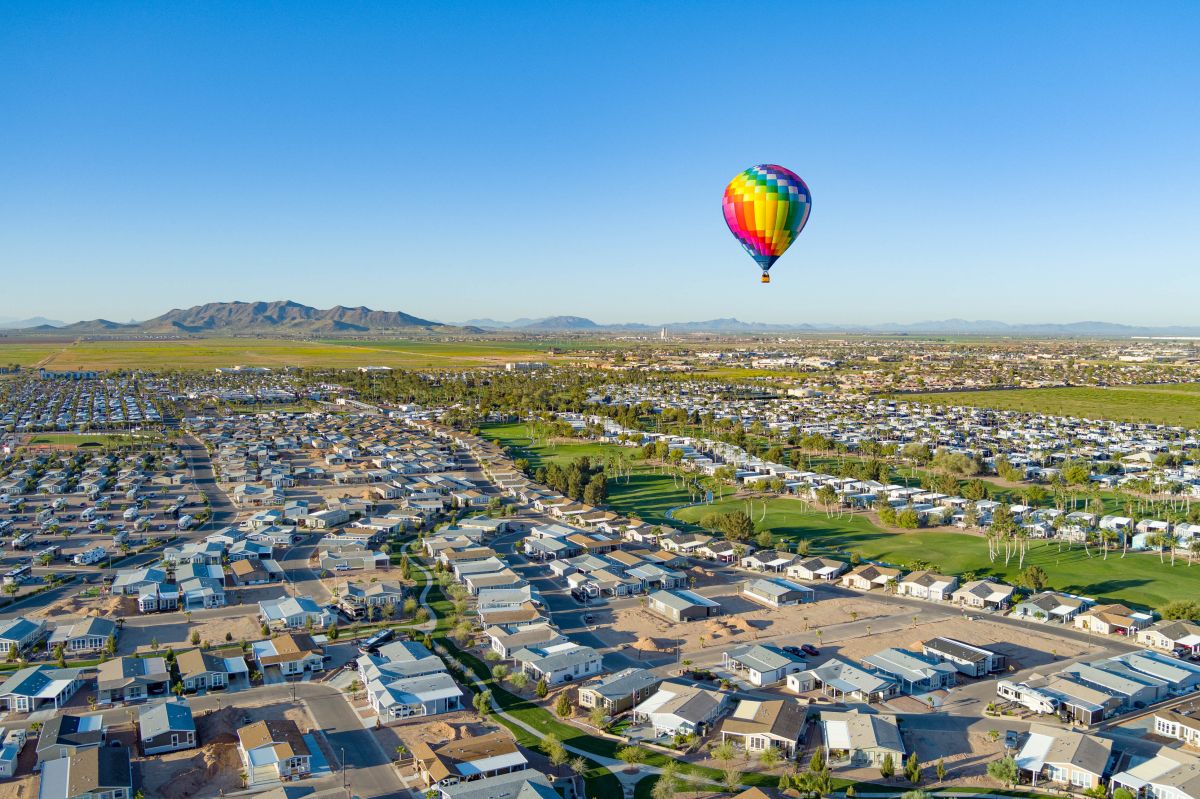
Palm Creek Resort & Residences — Casa Grande, AZ. A resort-style 55+ community offering an 18-hole par-3 championship golf course, three pools, a full activities calendar, and both manufactured homes and RV sites, roughly forty minutes south of Phoenix.
View Palm Creek Resort & Residences View Home Listings
Robson Ranch, Arizona — Eloy, AZ. A gated golf community offering an 18-hole championship course, indoor and outdoor pools, a creative arts center, and dozens of resident clubs, within an hour of both Phoenix and Tucson.
View Robson Ranch Arizona View Home Listings
Montesa at Gold Canyon — Gold Canyon, AZ. A premier 55+ community with breathtaking views of the Superstition Mountains, offering pickleball, bocce ball, walking trails, and move-in-ready homes about 45 minutes from Phoenix and Scottsdale.
View Montesa at Gold Canyon View Home Listings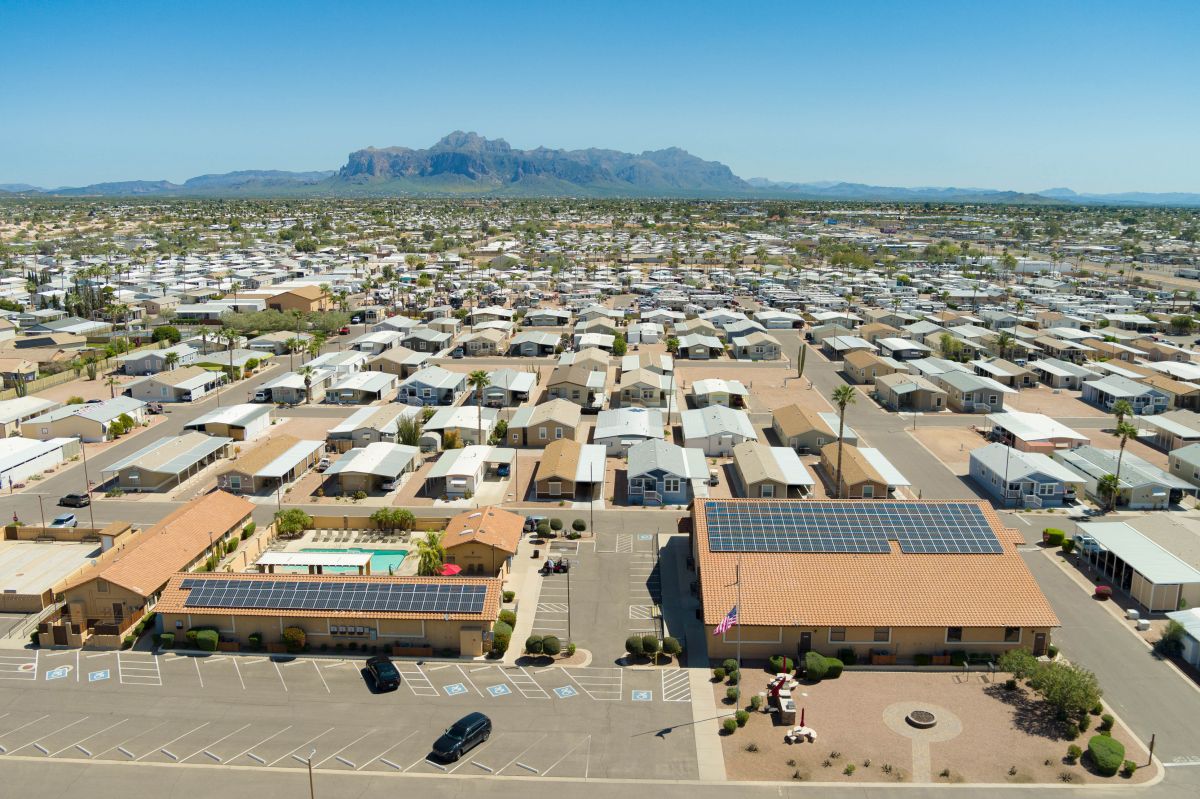
Lost Dutchman — Apache Junction, AZ. A vacation-style 55+ neighborhood with three community centers and a wide range of amenities, set in Southwestern desert country near the famous Superstition Mountains.
View Lost Dutchman View Home Listings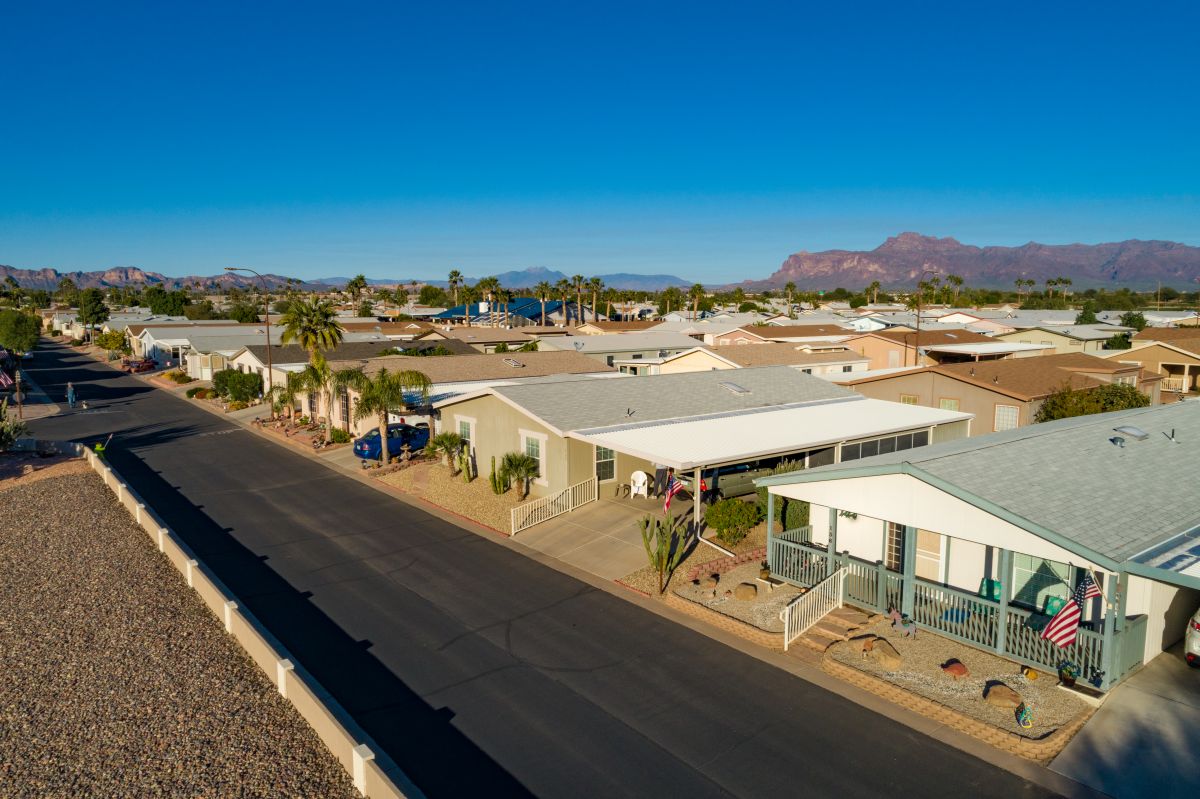
Desert Harbor — Apache Junction, AZ. Wide boulevard-style streets and attractive common areas set a serene tone at this manufactured home community, nestled against the Superstition Mountains with a full slate of on-site amenities.
View Desert Harbor View Home Listings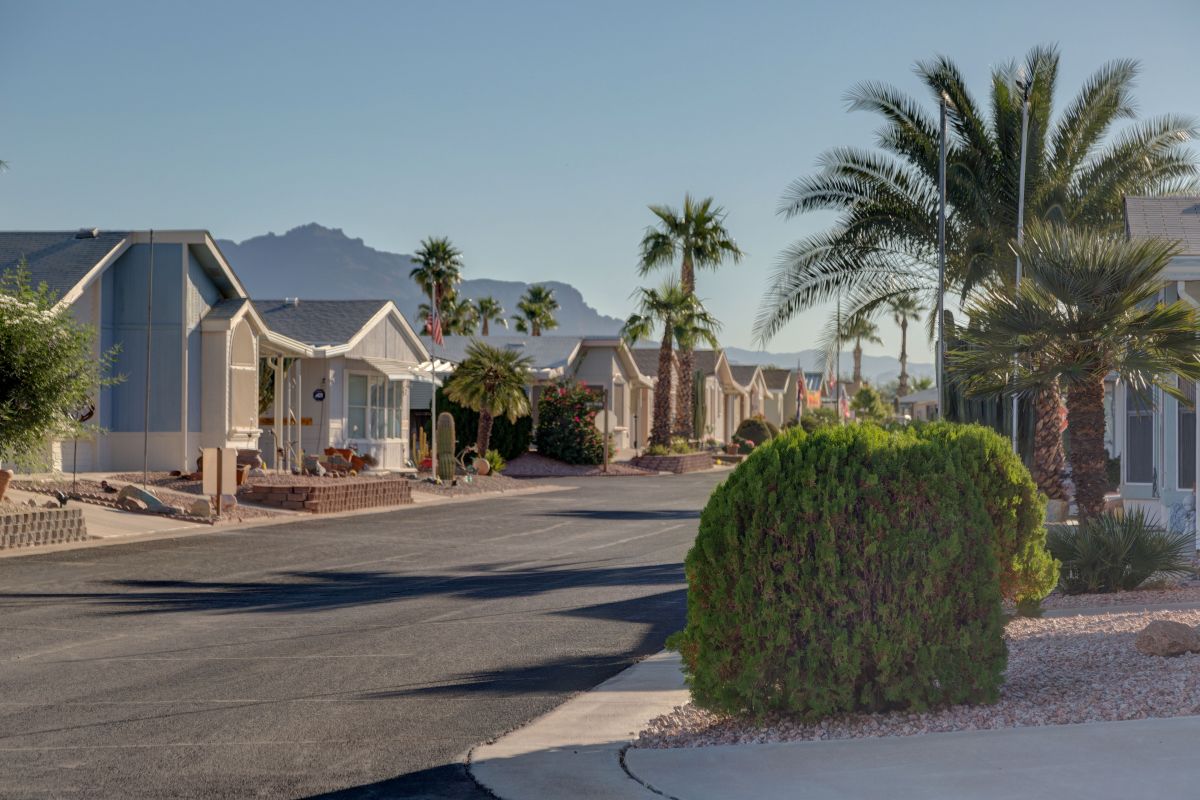
La Casa Blanca — Apache Junction, AZ. Known as one of the friendliest 55+ lifestyle communities in the East Valley, this quaint desert oasis is set against the Superstition Mountains with a genuinely neighborly, close-knit atmosphere.
View La Casa Blanca View Home Listings
SaddleBrooke Ranch — Oracle, AZ. A Robson Resort Community in the high Sonoran desert north of Tucson, offering dramatic mountain vistas in every direction, a gated entry with roving patrol, and distinctive resort-style homes.
View SaddleBrooke Ranch View Home ListingsThe Honest Bottom Line
No single factor explains why so many retirees choose Arizona's 55+ communities over the alternatives. It's the combination — a dry climate that genuinely eases joint pain and supports year-round activity, a moderate tax picture that doesn't touch Social Security, amenities that get used because neighbors are already there, and a social fabric built to prevent the isolation that quietly undermines so many retirements. Add a healthcare system shaped by decades of serving retirees, and the freedom to travel without worrying about an empty house back home, and it's clear why this lifestyle has held up in Arizona for generations rather than fading as a passing trend.
The best way to know whether it fits your own life is to see it firsthand — walk a clubhouse, sit by a pool at sunset when the mountains turn a deep shade of red, and picture a January morning that starts with sunshine instead of a snow shovel.