The Case for a Golf-Free 55+ Community: Why Skipping the Fairway Might Be the Smarter Move
Retirenet Media Team


 0 Recommendations
Lower dues, more usable amenities, and golf still just a short drive away.
Ask most people to picture a Florida retirement community and they'll describe the same scene: a clubhouse overlooking the 9th green, golf carts parked in driveways, and a monthly bill that quietly includes course maintenance whether you've picked up a club in a decade or not. Golf has been the default amenity of active adult living for so long that it's rarely questioned. But a growing number of retirees — including plenty who genuinely enjoy the occasional round — are discovering that a community built without a golf course isn't a compromise. It's often the better deal.
Here's why skipping the fairway is worth serious consideration, and eight real Gulf Coast Florida communities that prove a golf-free lifestyle can still be a resort-style one.
Lower HOA Fees, Plain and Simple
Golf courses are expensive to maintain, and someone always pays for that — usually every homeowner in the community, golfer or not. Turf management, irrigation, fertilizer, pro shop staffing, and clubhouse operations tied to the course all show up in HOA dues, whether you're teeing off every Tuesday or never once setting foot on the green. In a community without a golf course, that entire line item disappears from the budget. The savings can be substantial: golf-inclusive communities routinely carry HOA fees hundreds of dollars higher per month than comparable non-golf communities with similar square footage and amenity packages. Over a twenty-year retirement, that difference adds up to real money that can go toward travel, healthcare, or simply a more comfortable cushion.
A Wider, More Honest Resale Market
Golf course frontage sounds like a premium, and it can be — for the right buyer. But it also narrows your eventual pool of buyers to people who specifically want that view and that lifestyle. Non-golfers often actively avoid golf-course homes because of the extra dues, the errant ball risk, and the maintenance schedules that can dictate when you can and can't be out on your own lanai. A home in a golf-free community tends to appeal more broadly — to non-golfers, to buyers priced out of premium golf-course lots, and to anyone who simply wants predictable, lower carrying costs. When it's time to sell, a wider buyer pool generally means a smoother, faster transaction.
More Land Dedicated to Amenities You'll Actually Use
A single 18-hole golf course can occupy well over 100 acres — acreage that, in a non-golf community, gets reinvested into the amenities residents use every single day. That often means larger clubhouses, more elaborate resort-style pools, expanded pickleball and tennis complexes, dog parks, walking trails, community gardens, and event spaces built for the volume of activity a golf course simply can't support. Communities without a golf course frequently pack more usable, everyday recreation into the same footprint, because the land isn't tied up in a single-purpose amenity that only a fraction of residents use on any given day.
Less Water, Fewer Chemicals, Simpler Living
Golf courses are notoriously thirsty. A single 18-hole course in Florida's climate can consume well over a million gallons of irrigation water a week during dry stretches, along with the fertilizers and pesticides needed to keep fairways tournament-green year-round. For retirees who care about environmental footprint — or who simply live near the water table and worry about runoff into nearby canals, lakes, or the Gulf itself — a golf-free community sidesteps that entirely. It's a quieter, lower-impact way to live in a state where water management is an increasingly serious conversation.
Golf Is Still Nearby — Just Not Mandatory
Choosing a golf-free community doesn't mean giving up the game. Florida's Gulf Coast is saturated with public and semi-private courses, and many golf-free communities sit just minutes from excellent golf without folding the cost into every resident's HOA statement. This "pay to play, not pay to own" model is often the more rational choice even for retirees who golf regularly — you play when you want, skip the round when you don't feel like it, and never subsidize a course you're not using that week. It's the same golf access, minus the fixed overhead.
A Different Kind of Social Scene
Golf communities naturally organize social life around tee times, leagues, and the 19th hole. That works beautifully for golfers, but it can leave non-golfers feeling like they're living next door to someone else's clubhouse culture. Communities built without a golf course tend to organize their social calendar around amenities everyone can access equally — pools, fitness classes, craft groups, food trucks, live music nights, and water-based activities like kayaking or fishing. For retirees who want a genuinely inclusive social fabric rather than one built around a single sport, that difference is meaningful.
Fewer Golf Cart Crossings, More Peace and Quiet
It's a small thing until it isn't: communities built around a golf course also tend to be built around golf cart traffic — crossings, cart paths threading through residential streets, and the low hum of carts from sunrise leagues through sunset rounds. Golf-free communities generally see less of that through-traffic, which for many retirees translates into a genuinely quieter, calmer neighborhood feel, especially in communities oriented instead around walking trails, water features, or simply green common space.
The Bottom Line
A golf course isn't a flaw in a community and it isn't a requirement for a good one either — it's simply one amenity choice among many, with real costs attached. For retirees who don't golf, golf-free communities on Florida's Gulf Coast routinely deliver lower monthly costs, more diverse everyday amenities, and a social scene built for the whole neighborhood rather than one hobby. And for retirees who do golf but don't want to pay for a course every single month whether they use it or not, the "golf nearby, not golf included" model is often the smarter financial move. Below are eight real, verified Gulf Coast Florida communities — from Naples to Fort Myers to the Charlotte Harbor area — that prove resort-style 55+ living doesn't require a fairway out the back door.
Golf-Free Gulf Coast Florida Communities
Every community below is a verified, non-Directory-tier RetireNet.com listing, and none of them center the lifestyle around an on-site golf course.
 |
|
The Preserve
Lake Suzy, FL
One of the Gulf Coast's newest 55+ communities, built around Charlotte Harbor, fishing charters, and small-town Florida charm rather than a fairway — no course, no course dues, just genuine waterfront living between Tampa and Naples. View Community Request Info |
 |
|
Naples Estates
Naples, FL
A 30,000-square-foot clubhouse anchors this community's social calendar — pickleball, shuffleboard, and even a miniature golf green — with no championship course or golf dues weighing down the HOA, minutes from Fifth Avenue South and the Gulf. View Community Request Info |
 |
|
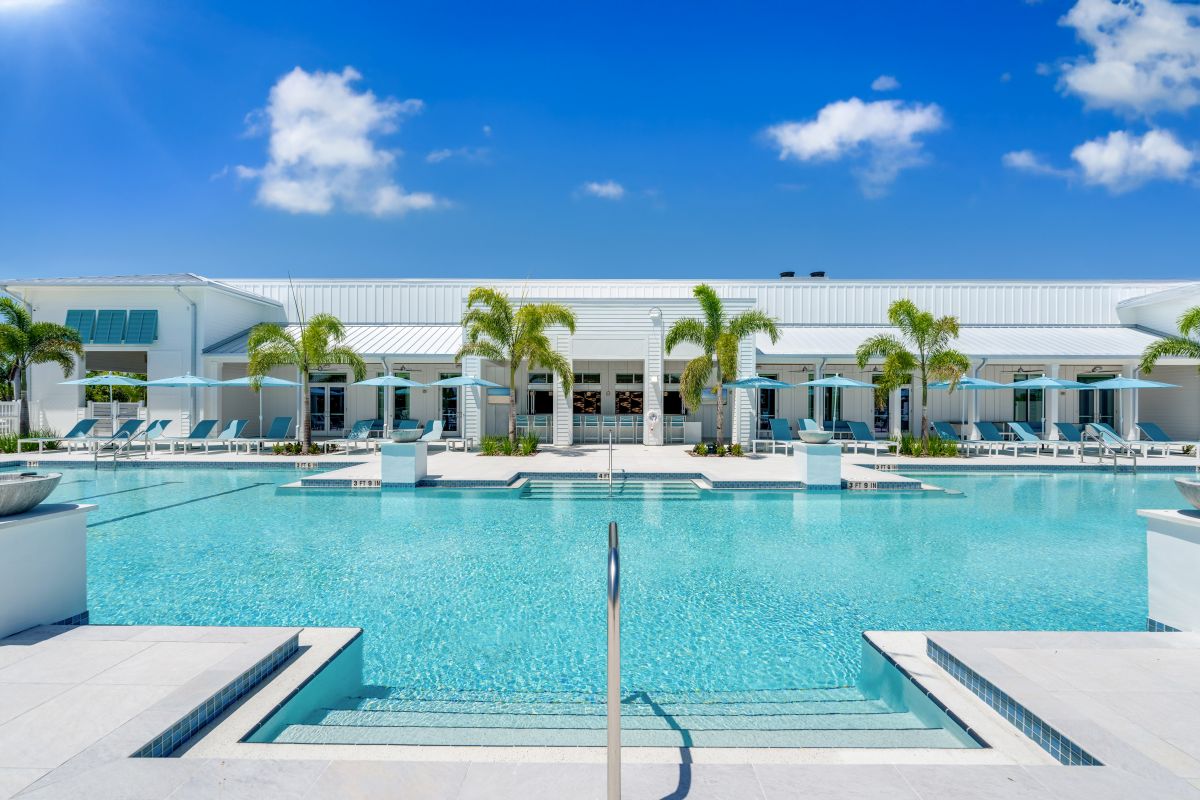
Bonita Terra
Bonita Springs, FL
A casual, gated, pet-friendly community built for fun rather than fairways — residents here are energized by clubhouse life and everyday amenities, without a golf course anywhere in the budget. View Community Request Info |
 |
|
Marco Naples
Naples, FL
This is the golf-nearby-not-golf-included model in action: no course on the property, but several world-class golf courses are just minutes away, along with the warm Gulf waters and sandy beaches of Naples and Marco Island. View Community Request Info |
 |
|
Siesta Bay RV Resort
Fort Myers, FL
A close-knit, meticulously maintained 55+ community where the amenity budget goes toward pools, social spaces, and grounds upkeep — not fairway irrigation — whether you're here for a winter escape or year-round. View Community Request Info |
 |
|
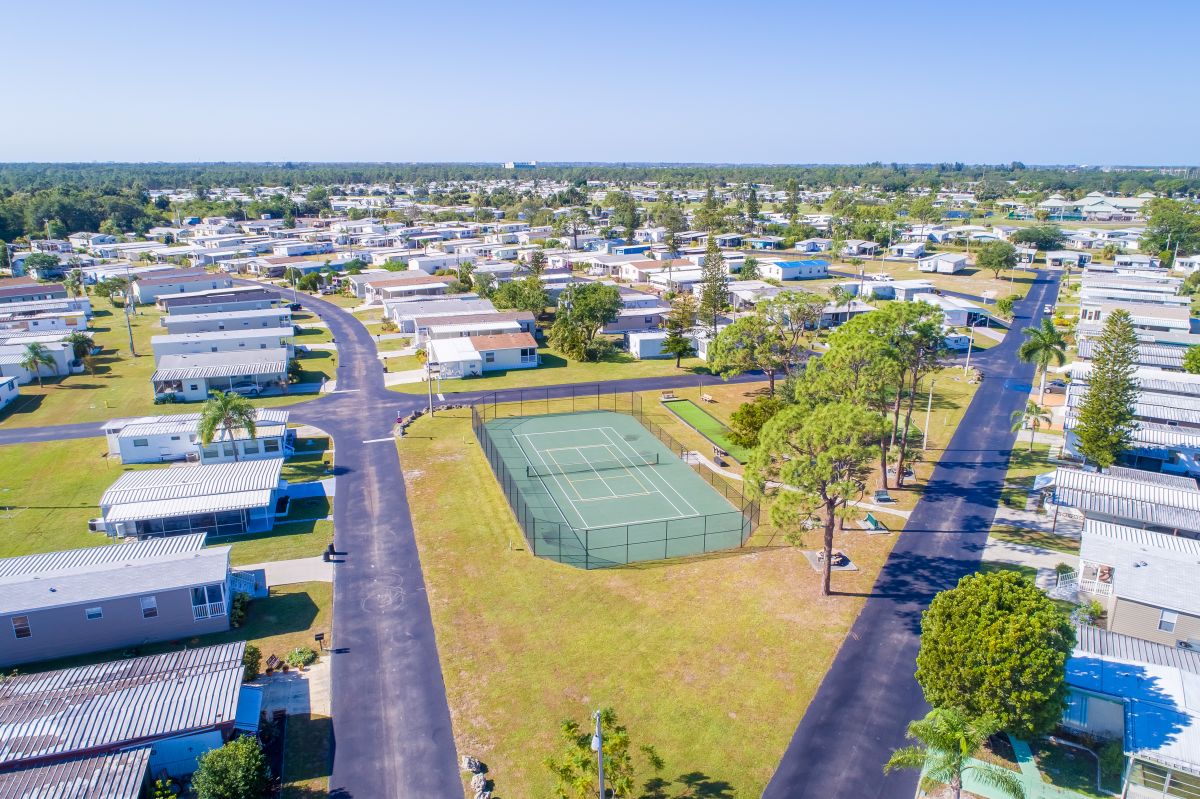
Indian Creek RV Resort & MH Community
Fort Myers Beach, FL
Waterfront and oceanfront living steps from Fort Myers Beach, with brand-new Skyline park models and a lifestyle built around the water rather than a course — no fairways, just sand and surf. View Community Request Info |
 |
|
Serendipity
North Fort Myers, FL
A new 4,400-square-foot clubhouse is the social heart here, with the Intracoastal Waterway, marinas, and a boat ramp just twelve minutes away — a resort-style lifestyle built around water, not a green. View Community Request Info |
 |
|
Marco Shores
Naples, FL
A 55+ active lifestyle community in highly sought-after Naples, with homes ranging from starter to move-up and a lifestyle built around Southwest Florida sunshine — no golf course dues attached. View Community Request Info |
|
You Don't Need a Fairway to Have a Fabulous Retirement
Lower dues, more usable amenities, and golf still just a short drive away — a golf-free community might be exactly the value proposition your search has been missing. Browse Gulf Coast Florida Communities |